
Are Dog Allergies Always Allergies? The Link Between Sensitivities, Gut Health and Antibiotics

If you've ever struggled with an itchy dog, you've probably heard the same explanation.
"It's allergies."
Whether it's itchy paws, recurring ear infections, red skin, constant scratching, hot spots or digestive upset, allergies are often one of the first things blamed. Yet many dog mums find themselves trapped in a frustrating cycle of elimination diets, allergy testing, medications and recurring symptoms without ever finding lasting answers.
So what if that isn't the whole story?
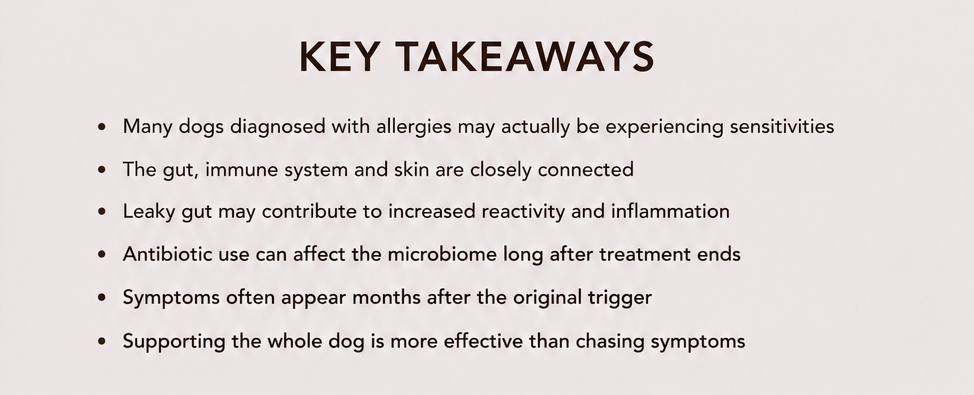
During my recent conversation with Master Canine Herbalist Rita Hogan, author of The Herbal Dog, one idea challenged the way many of us think about skin issues in dogs. What if many of the dogs we describe as having allergies aren't actually dealing with allergies at all? What if they're dealing with sensitivities?
At first glance, the distinction may seem like semantics. But as Rita explained, understanding the difference can completely change how we approach our dogs' health and may help explain why so many dogs continue to struggle despite our best efforts.
Dog Allergies vs Sensitivities: What's The Difference?
Rita didn't mince words when discussing the way the term allergy is used today.
"So allergies in general, the word allergy, it's really not an allergy. It's a sensitivity. Most allergies usually cause some level of anaphylaxis. I think our words are kind of messed up."
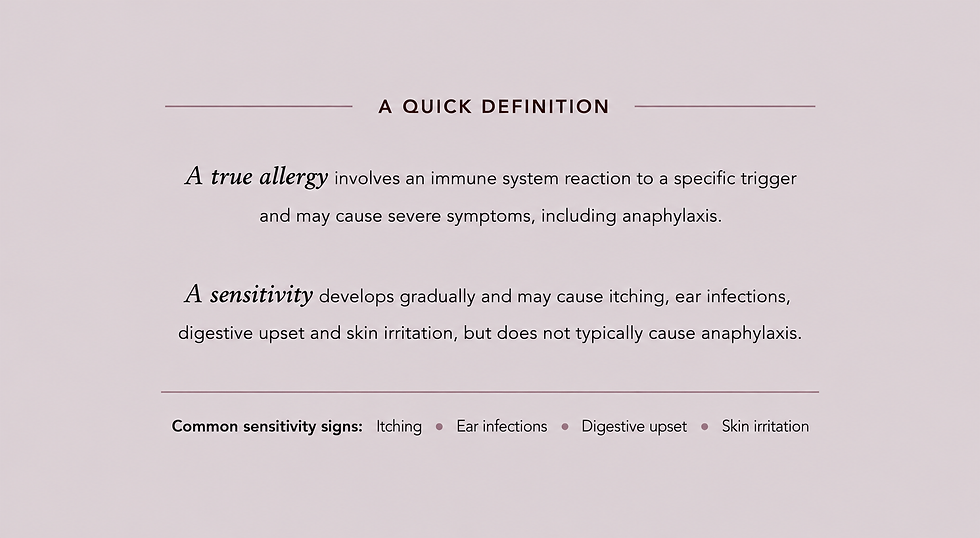
Anaphylaxis is a rapid, potentially life-threatening allergic reaction that requires immediate veterinary attention. Symptoms may include facial swelling, difficulty breathing, vomiting, diarrhoea, collapse and shock. Thankfully, these types of reactions are relatively uncommon.
Yet many dogs are labelled allergic because they experience chronic symptoms such as itching, paw licking, recurring ear infections, inflamed skin and digestive upset. This doesn't mean allergies don't exist. They absolutely do.
Rita's point is that many dogs diagnosed with allergies may actually be experiencing something different. Before we can understand why that matters, we first need to understand what a sensitivity is.
Unlike a true allergy, a sensitivity often develops gradually. The body becomes increasingly reactive to things it once tolerated without issue, including foods, grass, pollen, dust and environmental exposures. Rather than a single trigger causing the problem, the trigger may simply be revealing an imbalance that already exists.
Referring to the dogs most commonly labelled as "allergic", Rita explained:
"When a dog has allergies, the immune system gets very confused and it gets hyper-vigilant as well as overstimulated."
That distinction changes the questions we ask. Instead of focusing solely on what a dog is reacting to, we can begin asking why the body has become so reactive in the first place.
When we ask that question, the conversation quickly moves beyond allergens and towards the systems that influence immune function, inflammation and resilience.
The Gut-Skin Connection in Dogs
One of the themes that kept resurfacing throughout my conversation with Rita was that the body functions as an interconnected system. The skin doesn't work in isolation, nor does the immune system, the gut or the microbiome. When these systems are functioning well, dogs are often remarkably resilient. When they become compromised, symptoms can begin to appear in unexpected ways. This is why gut health comes up so often in discussions about chronic skin issues.
Most people think of the digestive system as simply the place where food is broken down and nutrients are absorbed. In reality, it plays a much larger role. The gut helps regulate immune function, manage inflammation, absorb nutrients and support the trillions of microorganisms that make up the microbiome. As Rita explains:
"The skin is definitely a representation of what's going on inside."
In other words, skin symptoms are often a reflection of internal health. The skin may be where we see the problem, but it isn't always where the problem begins.
What Is Leaky Gut in Dogs?
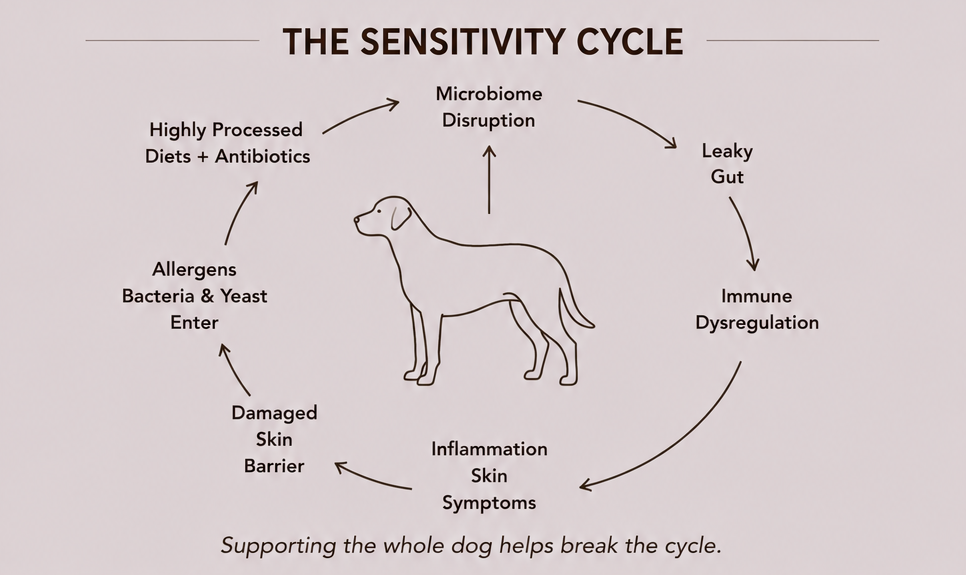
The digestive tract is lined by a protective barrier that allows nutrients into the body while keeping unwanted substances out. When functioning properly, this barrier is highly selective. When damaged or inflamed, it can become more permeable, a condition commonly referred to as leaky gut.
As permeability increases, substances that would normally remain inside the digestive tract may pass into the bloodstream. These can include bacterial fragments, toxins and partially digested food particles. The immune system recognises these substances as foreign, triggering inflammation and increasing immune activity. Over time, this heightened state of reactivity may contribute to symptoms that are often mistaken for allergies.
Can Leaky Gut Cause Skin Problems in Dogs?
Leaky gut may be one of the most overlooked drivers of chronic sensitivities in modern dogs.
One reason is the heavy reliance on highly processed diets. Many dogs consume the same ultra-processed kibble every day for years with very little dietary diversity. While kibble is convenient, highly processed diets may contribute to reduced microbiome diversity, increased inflammation and compromised gut barrier integrity in susceptible dogs.
As the gut becomes more vulnerable, the immune system may become increasingly reactive. Not necessarily because the dog has developed a true allergy, but because the body has lost some of its resilience.
This is why so many holistic practitioners begin with the gut. When the gut lining is supported, microbiome diversity improves and inflammation is reduced, symptoms often improve as well. That doesn't mean every skin issue begins in the gut. But it does mean the gut is often one of the first places worth investigating.
Why Itchy Dogs Often Have a Damaged Skin Barrier
The skin isn't simply a covering. It is one of the body's most important protective barriers.
A healthy skin barrier helps retain moisture, supports a balanced skin microbiome, keeps allergens out and prevents harmful bacteria and yeast from gaining a foothold.
When the skin becomes dry, inflamed or damaged, that barrier begins to weaken. As moisture loss increases and inflammation persists, the skin becomes more vulnerable to allergens, bacteria and yeast. This creates a self-perpetuating cycle where irritation leads to further barrier damage, making symptoms increasingly difficult to resolve. The original trigger may have been internal. But once the skin barrier becomes compromised, the skin itself can begin driving the cycle forward.
One of the most common things capable of influencing the gut, immune system, microbiome and skin barrier all at once is something many dogs receive throughout their lives: antibiotics.
The Antibiotic Connection: How Antibiotics May Influence Allergies and Sensitivities
Throughout my conversation with Rita, one contributor kept resurfacing again and again: antibiotic use. In fact, she made a statement that sits at the heart of this discussion.
"Usually, I can trace most of these things back to antibiotic use... A lot of people will tell me, 'He had antibiotics three years ago... this didn't start until June.' It's the antibiotics."

Before we go any further, let's be clear. Antibiotics save lives. They are one of the most important tools available in modern veterinary medicine and can mean the difference between recovery and life-threatening illness.
This isn't an anti-antibiotic conversation. It's a conversation about understanding their impact and supporting the body while it recovers.
What Most Dog Mums Are Never Told
Rita also highlighted an uncomfortable reality. Antibiotics are among the most commonly prescribed medications in both human and veterinary medicine. While they are often essential, they are also frequently prescribed after surgery, for recurring infections and as a precautionary measure. Yet many dog parents are never educated about their impact on the microbiome or how to support recovery afterwards.
Most veterinary conversations focus on the infection itself, and understandably so. The infection is the immediate priority. But once treatment begins, many dog mums are left without guidance on how to support gut health, whether probiotics may help, what signs to watch for afterwards and how long recovery may take. For many dogs, these questions matter just as much as the original prescription.
What Do Antibiotics Actually Do?
Antibiotics are designed to kill or inhibit bacteria responsible for infection. The challenge is that they cannot always distinguish between harmful bacteria and beneficial bacteria.
Beneficial bacteria help digest food, support the gut lining, regulate inflammation, communicate with the immune system, support nutrient absorption and help keep yeast populations in balance.
When these populations are disrupted, the effects can extend far beyond the digestive tract.
This is one reason Rita believes antibiotic history is such an important piece of the puzzle when investigating chronic sensitivities.
"I think the overabundance of antibiotic use is the main culprit in these types of sensitivities."
Why Recovery Takes Longer Than Most People Realise
One of the most striking observations Rita shared was how long microbiome recovery can take when no support is provided.
"If we do absolutely nothing to a dog, their original microbiome never fully returns. Left unsupported, it can take up to two years for the microbiome to begin levelling out again."
Most pet parents would be surprised to hear that.

The reason recovery takes so long is that the microbiome isn't a single organism. It's an ecosystem. Trillions of microorganisms interact with one another and with the body every day. When that ecosystem is disrupted, bacterial populations must rebuild, diversify and re-establish balance.
At the same time, the immune system is adapting to those changes. Inflammatory pathways are adjusting and the gut lining may still be recovering. This process doesn't happen overnight.
Why Symptoms Often Show Up Later
One of the reasons antibiotic-related issues are so often overlooked is timing.
The antibiotics may have been prescribed months ago or even years ago, yet the symptoms appear much later.
Immediately after treatment, a dog may appear completely normal. But beneath the surface, subtle changes may be occurring. Microbiome diversity may decline. Digestion may become less efficient. The gut barrier may become more vulnerable. Inflammation may gradually increase. Yeast may gain an advantage. The immune system may become increasingly reactive.
Then one day the dog develops itchy paws, recurrent ear infections or begins reacting to foods they previously tolerated. The symptoms feel disconnected from the original event, but the groundwork may have been laid much earlier.
"In those two years, a lot can happen. Dogs can become uncomfortable, develop food sensitivities, struggle to digest proteins properly and experience changes that make the immune system more reactive."
What This Looked Like for Hattie
This is something I experienced firsthand with my own dog, Hattie.
Following complications during delivery, Hattie required an emergency caesarean section and emergency spay. The antibiotics she received were essential. Without them, the risk of infection would have been significant.
Knowing the potential impact antibiotics can have on the microbiome, I wanted to support her from the very beginning. During treatment, and for several weeks afterwards, she received probiotics to support her gut health while her body recovered.
Once the puppies were beginning to eat independently, I introduced digestive and gut-supportive supplements to help support her gastrointestinal health, soothe the digestive tract, maintain the integrity of the gut lining and support nutrient absorption. Despite these efforts, recovery wasn't entirely straightforward.
After the puppies were fully weaned, Hattie developed significant yeast overgrowth. She began losing hair, scratched constantly, developed infections in both ears and her skin developed a greasy film. Watching her struggle after everything she had already been through was heartbreaking.
After an emergency caesarean section, emergency spay and the demands of raising a litter, it would have been easy to view her symptoms as isolated skin problems or assume she had suddenly developed allergies.
Looking back, I can see they appeared during a period when her body was still recovering from significant physical stress, surgery, antibiotics and hormonal changes.
Today she's healthy, comfortable and covered in curls again. The infection was gone, but recovery continued long after the medication ended.
What I Used To Support Hattie's Recovery
During Hattie's recovery, I focused on supporting her microbiome, digestive tract and gut lining while her body recovered from surgery, antibiotics and the demands of raising a large litter.
Alongside probiotics, the products I personally used as part of her recovery plan included:
These products were used to support gastrointestinal health, nutrient absorption, digestive comfort and gut barrier integrity during her recovery in conjunction with a species appropriate raw diet.
Every dog is different, so it's always worth discussing your dog's individual needs with your veterinarian or canine health professional.
Looking Beyond The Gut: The Role Of The Liver, Lymphatic System And Elimination Pathways
One of the most important lessons from my conversation with Rita was that healing isn't just about the gut.
"I always explain to people that this is the gut, but it's also the liver and the lymphatic system. And we need both of those systems online to heal."
The body relies on multiple systems to process and eliminate waste products, inflammatory compounds and cellular debris. These include the digestive tract, liver, kidneys, lymphatic system and skin. Together, these systems help maintain balance throughout the body. When they become overwhelmed, symptoms may begin to appear elsewhere. Often through the skin. As Rita explains:
"Whenever you have skin issues, you can know that the elimination organs in your dog are not working like they should."
The skin is not always the problem. Often, it's the messenger.
Why We Need To Stop Chasing Symptoms
One of the most powerful insights Rita shared was this:
"We need to work on getting out of the mindset that we have to do everything we can if our dog has even a single symptom to get rid of the symptom. We just start chasing the symptoms when really it's the elimination organs and the lymphatic system and gut that are the problem."
For many dog mums, this represents a significant shift in thinking. Instead of asking how to suppress symptoms as quickly as possible, we begin asking what systems may need support underneath those symptoms. That shift changes everything.
How to Support Gut Health After Antibiotics in Dogs
One of the biggest takeaways from my conversation with Rita was that support shouldn't begin after antibiotics are finished. It should begin while treatment is taking place.
The goal isn't to undo antibiotics. The goal is to support the systems that help maintain balance while the body recovers.
This may include probiotics, fresh minimally processed foods, gut-soothing herbs such as aloe vera, slippery elm and marshmallow root, liver-supportive herbs such as milk thistle and dandelion, movement, hydration and gentle skin barrier support.
Recovery is rarely overnight. The microbiome takes time to rebuild. The gut lining takes time to recover. The immune system takes time to regain balance. Patience matters.
Looking Beyond Food: Environmental Triggers That May Affect Sensitive Dogs
Food is an important piece of the puzzle, but it isn't always the whole story. Rita also highlighted the impact of environmental exposures.
Many dogs are exposed to potential irritants every day through laundry detergents, cleaning products, synthetic fragrances, air fresheners, lawn chemicals and household sprays.
A dog doesn't experience these exposures separately. The body experiences them collectively. The more burden we remove, the more capacity the body may have for healing.
Are We Asking the Wrong Questions About Dog Allergies?
Towards the end of our conversation, Rita shared a perspective that beautifully summarises everything we've discussed.
"When a client comes to me with allergies and sensitivities, I look at them comprehensively as an ecosystem."
That perspective ties together everything we've discussed. Gut health. Microbiome diversity.
Antibiotic history. Skin barrier integrity. Nutrition. Environmental exposures. Elimination pathways. None of these systems operate in isolation. They are all part of the same ecosystem.
For many dogs, recurring skin issues may involve far more than a simple allergy. When we focus only on the symptom, we risk missing the bigger picture.
When to Seek Additional Support
If your dog is dealing with recurring skin issues, digestive concerns, chronic ear infections or ongoing sensitivities, you don't have to navigate it alone. A holistic or integrative veterinarian, canine naturopath, herbalist or qualified canine nutritionist may be able to help you investigate the bigger picture and identify factors that could be contributing to your dog's symptoms.
Continue Exploring
If your dog struggles with recurring itching, ear infections, greasy skin or yeast overgrowth, I encourage you to read 5 Ways to Treat Yeast Infections Naturally.
If you'd like to learn more about how nutrition supports gut health, immune function and long-term wellbeing, our article Natural Nutrition and Health for Your Dog is a great place to start.
Listen to the Full Conversation
If you'd like to dive deeper into these topics, watch the full episode of The Natural Dog Mum Podcast It's Not Allergies? What's Really Causing Your Dog's Symptoms featuring Rita Hogan.
And if you're navigating similar challenges with your own dog, I'd love for you to join our free Facebook group The Natural Dog Mum Community.
Symptoms are often communication. Sometimes the most important question isn't:
"What is my dog allergic to?" It's: "What is my dog's body trying to tell me?"


Comments